
CWNE Case Study Essay
Death by Default
How 80 MHz Hotspots Choked a High School Network
A regional education authority asked me to look at a high school where the Wi-Fi had become so slow it was effectively unusable. I hadn't designed this network, but the school was a customer in my portfolio, so I was engaged to run a post-installation audit and explain why their WLAN was failing every user in the building.
I surveyed all three floors with my Ekahau Sidekick 2: passive data on both bands, active throughput, ping and latency, channel utilization, airtime and capacity health, plus a spectrum capture on every floor. The results confirmed what a quick visual inspection had already suggested: this network had been installed but never re-validated as its use changed. What began as a nice-to-have add-on had become something every student and staff member depended on.
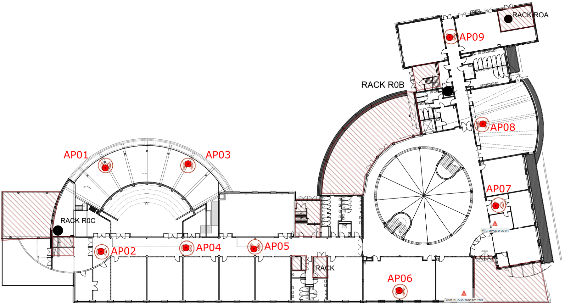
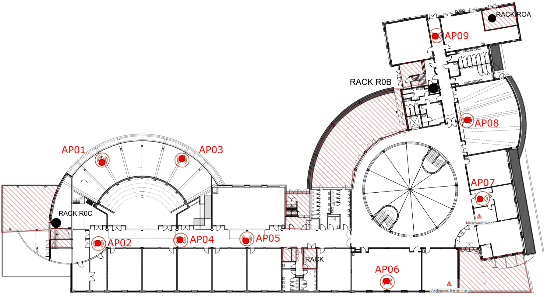
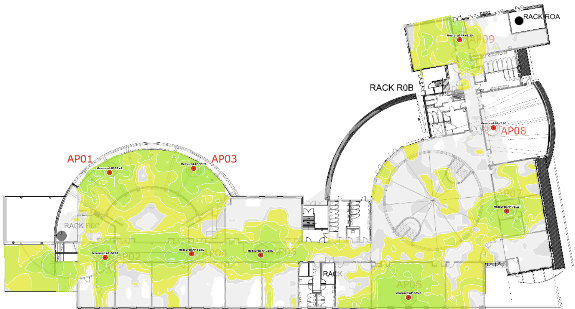
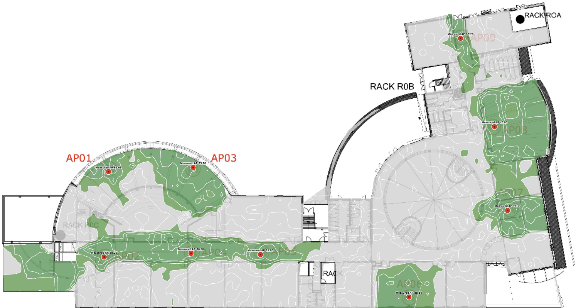
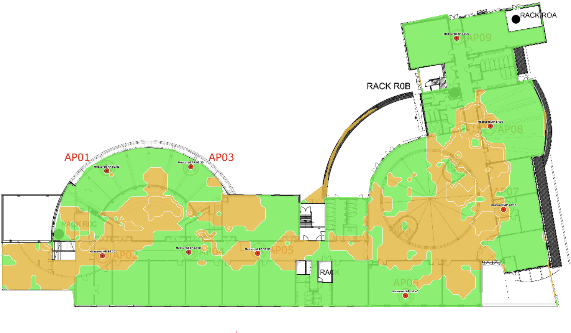
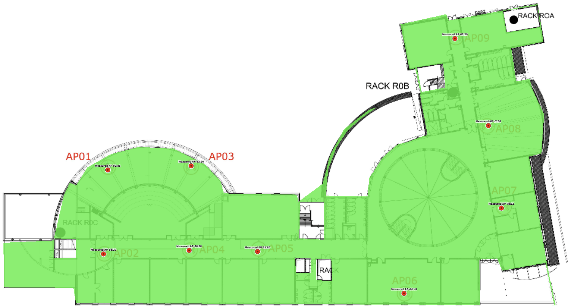
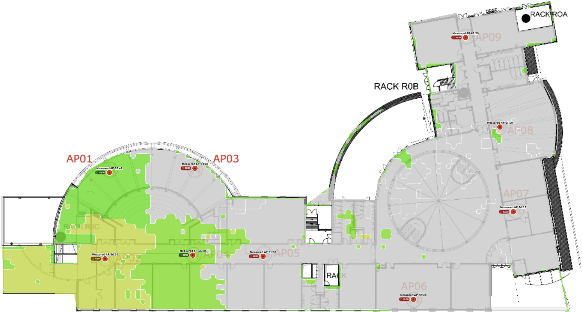
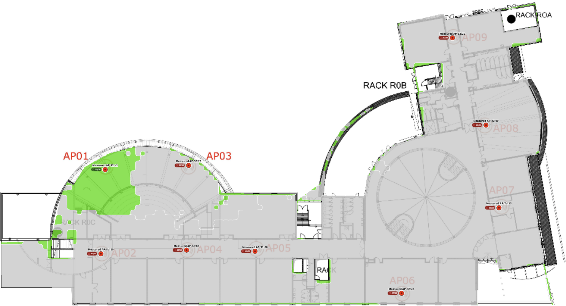
Survey results for Ground Floor as a reference:

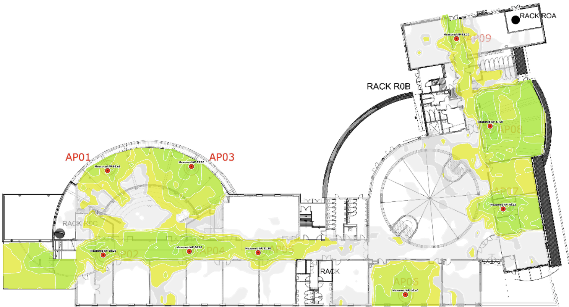
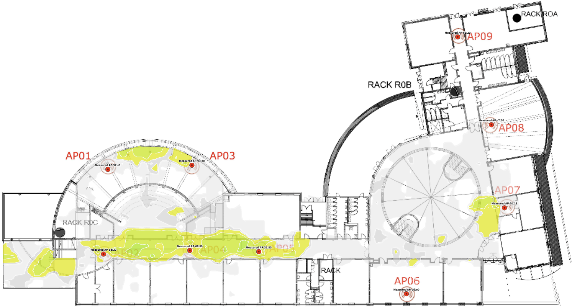
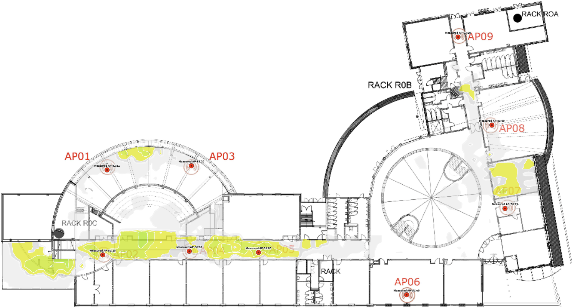

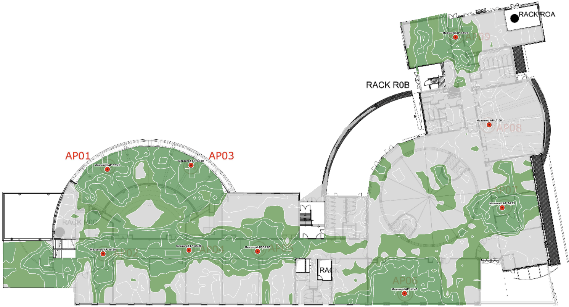

The network that was never re-evaluated
A lot of access points sat in the corridor, and the corridors were walled off from the classrooms by heavy concrete beams. Wi-Fi must live as close to the user as possible, and nobody sits in a hallway. Careful placement of APs in the corridor can help with roaming but should not be the whole deployment.
Once the signal had fought its way through the concrete and its heavy attenuation, primary coverage inside some classrooms dropped to between -72 dBm and -86 dBm. Secondary coverage was poor too, though at least the hallway APs allowed some roaming. The biggest problems: primary signal strength, CCI/CCC, SNR, capacity, and internet break-out speeds too slow for a modern high school. Being able to connect doesn't mean you have a great experience.
With weak signal and no design behind it, SNR in the rooms collapsed: a device could look connected — enough to load a page — while a video call simply failed. The configuration made it worse. The 2.4 GHz radios were transmitting hotter than 5 GHz, so clients piled onto 2.4 GHz and formed oversized, sticky cells. The minimum basic rate still allowed every legacy data rate, inflating those cells further and burning airtime on slowly transmitted frames.
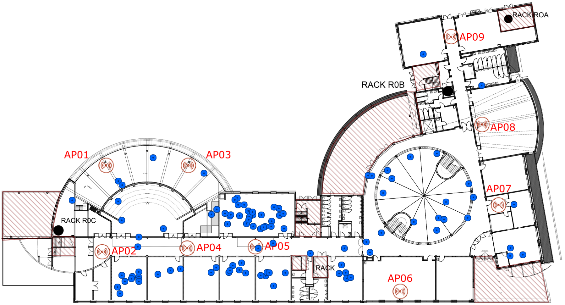
Then the spectrum capture showed me what was really happening. The 5 GHz band was full of rogue BSSes that did not belong to the school at all. Almost every student, tired of a network that did not work, had turned on their phone's hotspot to use 5G as a personal backhaul. The student hotspots I captured were mostly on 5 GHz, and most of those ran 80 MHz wide, the rest 40 MHz. Each phone was lighting up two to four 20 MHz channels at once, and hundreds of them were doing it at the same time, in the same building, by default.
The building is in a busy city, so co-channel interference was a fact of the environment, not a design defect. The 2.4 and 5 GHz band were already crowded with neighboring networks long before a single student touched their phone. After filtering out all the residential SSIDs, I still counted over 120 student hotspots.
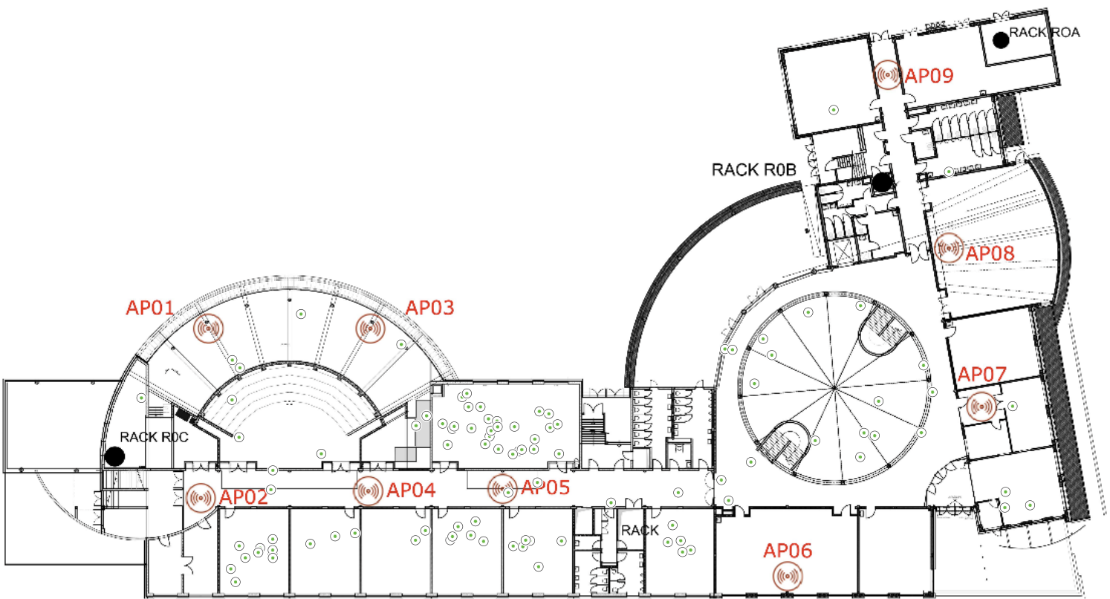
1. Ground Floor Student Hotspots
Wi-Fi is a polite protocol. Before it transmits, every device performs a clear channel assessment (CCA) and backs off the moment it senses energy on the medium. With the 5 GHz band blanketed by overlapping 40/80 MHz hotspots, the odds of ever finding the channel idle were very limited. The one band that should have been the escape route from the congested 2.4 GHz had been eaten two to four channels at a time, by the users themselves. The network was spending more time arbitrating for the air than using it.
And it fed on itself. The hallway design produced unusable Wi-Fi; unusable Wi-Fi pushed students to hotspots; hotspots saturated the band and made the Wi-Fi even worse. No amount of RF tuning breaks that loop on its own.
The recommendation had to address both layers. The infrastructure needed a genuine redesign: APs inside the classrooms, secondary coverage for roaming, 20 MHz channels for spatial reuse, balanced fixed transmit power, a minimum basic rate raised to 12 or 24 Mbps, and capacity planning sized to devices per room rather than to the corridor.
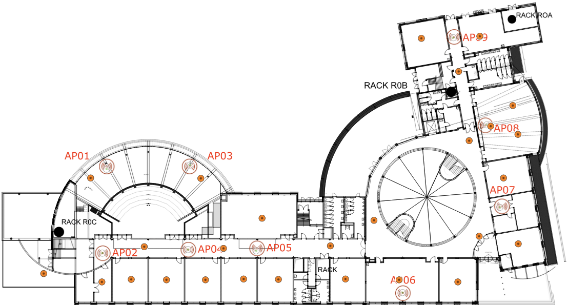
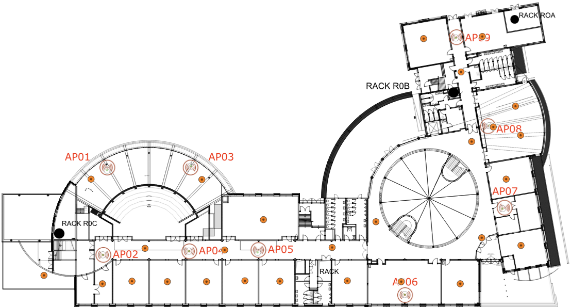
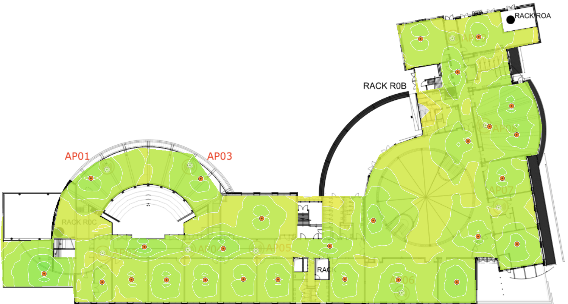
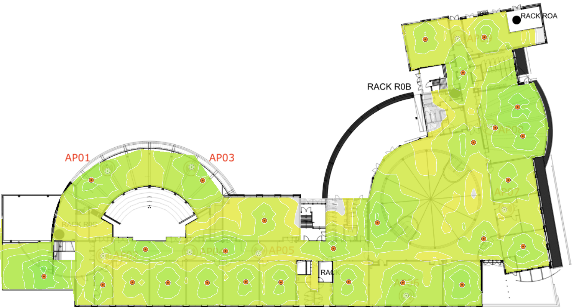
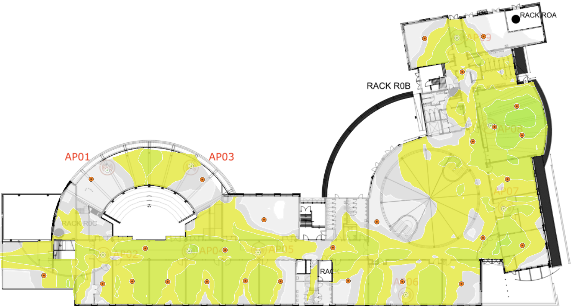
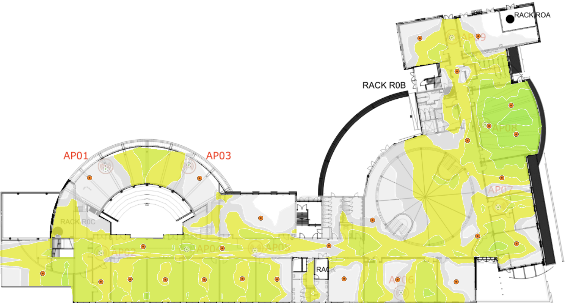
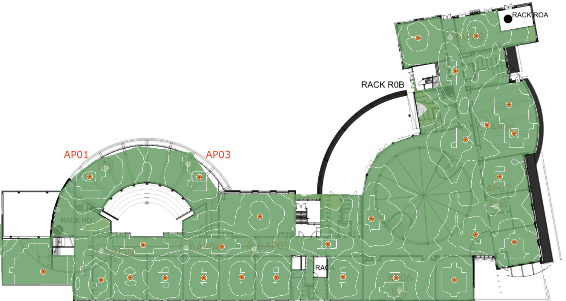
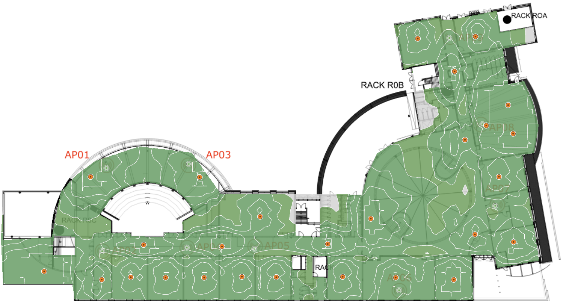
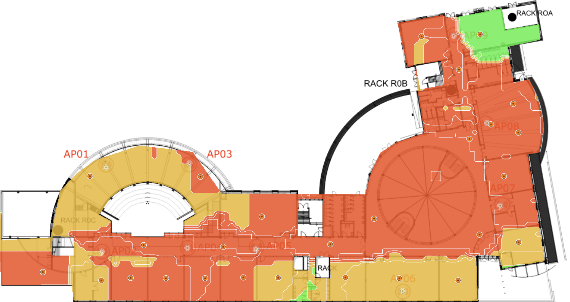
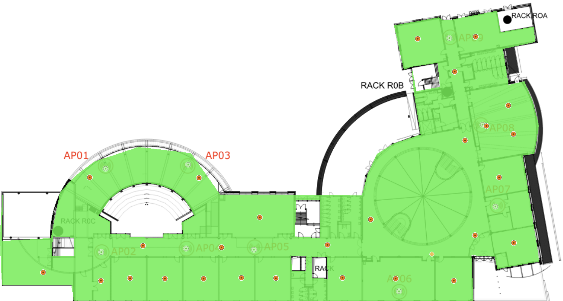
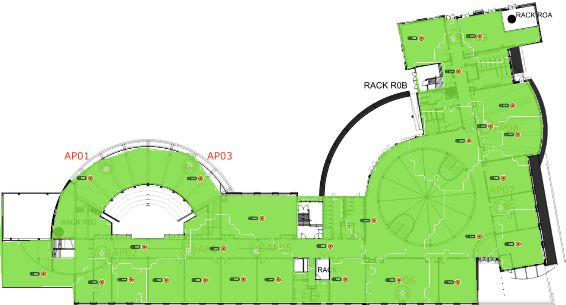
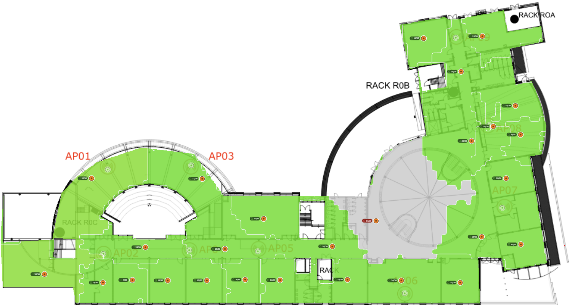
redesign with Ekahau AI Pro online using previously measured data as input
The human layer mattered just as much: the only durable way to end the hotspot storm is to give students a network good enough that they stop reaching for their phones. Restored capacity is the real interference mitigation.
What this case taught me
- Coverage Is Necessary, Never Sufficient. In a dense environment, airtime is the scarce resource and capacity is the design. A building can be fully "covered" and still be completely unusable.
- Users Are Part of the RF Environment. The most damaging interference on this network came not from the engineering, but from people rationally responding to bad engineering. Every one of them was choking the network by default.
- A WLAN network, like all networks, is a work-in-progress. You need to ask yourself the question of whether the requirements that were set years ago at the beginning of the project still match the requirements necessary today.
- Design Knowledge Is a Diagnostic Tool. The CWDP curriculum taught me to anchor every design decision to requirements — applications, device density, and throughput per user. That framework is what made the problems here immediately visible. This network had no documented requirements to begin with, and nobody had revisited them as the school's dependency on Wi-Fi grew.